Sunday, June 29, 2014

Quote: Negation versus Nation

El nacionalismo sólo permite afirmaciones y, toda doctrina que descarte la duda, la negación, es una forma de fanatismo y estupidez.
-Jorge Luis Borges 

"Nationalism only permits affirmations, and every doctrine that discards doubt, negation, is a form of fanaticism and stupidity."


Friday, June 21, 2013

“Clear verse about dark matters”: Thoughts on Book 1 of De Rerum Natura by Lucretius

Fools have more love and admiration, always
For things their blindness sees in hidden meanings;
They base their truths on what can sometimes tickle
Their ears, or what is soaked in sweetish sound.
(p. 38)*

Lucretius really lays into fans of Heraclitus in the preceding lines for the folly of believing that all things are made of fire rather than of a mixture of matter and void. Lucretius: If things are made of fire, then why don’t they get hotter the denser they are? You just got served.

**********General context************

9780253201256_med Around the time of the fall of the Roman Republic, Lucretius the philosopher/scientist/poet must have stumbled upon the philosophy of the Greek stoic, Epicurus, and thought it offered the most coherent and simple explanation there was for the behavior of observable reality. So he turned that philosophical system into an epic sort of poem. I’ve just finished the first of six books, and thought I’d share a few thoughts.

So instead of being filled with high drama, heroes, reversals of fortune, vicissitudes of fate, etc., The Way Things Are sings of scientific proofs, like: that nothing comes from nothing, that matter is indestructible, things are composed of matter and void, that matter resists motion and void makes way for movement, and that atoms must not be infinitely small but rather must be indivisible.

Frankly, I get why someone might find it boring. If you’re not an historian of science, the plainly didactic content of the poem is a pretty dry lesson. Much of Book 1 consists of Lucretius refuting the arguments of competing theories of nature. (The one refutation that got me to laugh out loud a bit concerned the idea that when a log is set on fire, then fire must have already been contained within the log before igniting. Lucretius basically asks, “then why, when we grind corn, doesn’t blood pour out? We eat the corn and it sustains us, so the blood must already be in the corn, but where’s the blood?”)

**********Critique of Religion************

Much more interesting to me is the critique of religion and superstition throughout the poem. Lucretius, true to the epic form, opens his verse with an invocation of Venus. However, his invocation, perhaps more than petitioning the goddess for inspiration, is primarily a request for Love to neutralize War, and give the human race some time and space to calmly think.

Ah, goddess, pour yourself around [War], bend
With all your body’s holiness, above
His supine meekness, drown him in persuasion,
Imploring, for the Romans, blessed peace. (20)

An anti-invocation, perhaps? Later Lucretius refers to that “grim Religion” that once forced human life to grovel until Epicurus dared “raise his mortal eyes / Bravely against this menace” (21), and he describes priests as fear-mongers, offering nothing but terrifying fantasies “to overturn your sense / Of logic” (22).

Plain about his intentions, Lucretius describes the purpose of the poem thus:

                                     I teach great things,
I try to loose men’s spirit from the ties,
Tight-knotted, which religion binds around them. (46)

So perhaps then, after all, there is something of high epic drama about The Way Things Are in the way Lucretius configures himself in opposition to the gods, as a liberator of human life from the foul tyranny of capricious overlords, except—you know—the gods are just bullshit, so no Krakens get released, no committees of elves and hobbits need forming, no cosmic battle require mythical weaponry, or anything like that.

**********Poetry as Sweetener************

Such epic framing, and yet when it comes down to it, the action of the poem is basically Lucretius saying: “Have a seat and make yourself comfortable. Let me tell you about these things called atoms. Now some guys are going to tell you that you can just keep cutting stuff in half forever, but those guys are idiots! Obviously….”

In fact, looking again at the epigraph at the top of this post equating “sweetish sound” with junk science, I wonder whether the choice of poetic form doesn’t overly-adulterate and thereby undermine the lesson. The Way Things Are is “edu-tainment,” and Lucretius admits as much:

Just as when doctors try to give to children
A bitter medicine, they rim the cup
With honey’s sweetness, honey’s golden flavor,
To fool the silly little things, as far
As the lips at least, so that they’ll take the bitter
Dosage, and swallow it down, fooled, but not swindled,
But brought to health again through double-dealing,
So now do I, because this doctrine seems
Too grim for those who never yet have tried it,
So grim that people shrink from it, I’ve meant
To explain the system in a sweeter music,
To rim the lesson, as it were, with honey,
Hoping, this way, to hold your mind with verses
While you are learning all that form, that pattern
Of the way things are. (46-7)

For Lucretius, obviously, the Epicurean system is true in any form, founded on clear logic and reason. The poetry merely conveys—does not corrupt, presumably because Lucretius knows his own intent is not disingenuous. But will this be the case? Will the pure and clear knowledge of ungodly nature not suffer violence from the mouth of the poet? Will the quiet serenity of the philosopher not give way to dithyrambic frenzy when aesthetic reason commands it?

___

*All quotations come from:

Lucretius, Carus Titus. The Way Things Are: The De Rerum Natura of Titus Lucretius Carus. Trans. Rolfe Humphries. Bloomington: Indiana UP, 1969. Print.

which was purchased from Another Story Used Books in Allentown, PA for a buck seventy-five.

Thursday, June 13, 2013

We Must Do Something, Even If It Makes Matters Much Worse

And that is why our war in the Middle East is going to start all over again.

I’ve given Obama a lot of credit for his seeming reluctance to involve the US in military conflicts. A McCain or Romney administration, I’m sure, would have had boots on the ground by this point. But the Liberal Interventionists in the administration, such as Susan Rice and Samantha Power, so traumatized by the failure to prevent the Rwandan genocide and as helplessly compelled to view all conflict through the lens of that failure as the previous administration was compelled to view all conflict through the lens of the success of the Cold War, and operating under the doctrine the UN now calls “Responsibility to Protect” but which was once known as the White Man’s Burden, seem to have made a winning case for dipping a toe into the tar pit.

Now that we’ve determined (to “a high level of confidence”) that Bashar al-Assad has used sarin gas several times over the past year, we’re going to fix it by handing out guns to the “moderate” rebels. It’s a slam dunk. I wonder, if we offered chemical weapons to the rebels, whether they would use them. I suspect they would.

_68167341_9d549d78-72e6-4be6-9f9c-8c79222c35f7
Rebel General Idris: “Give me 200 antitank missiles, 100 antiaircraft weapons, and half a million bullets so that the killing can stop.”

Now that we’ve selected our proxy (an incoherent faction within an even more incoherent faction), it will be that much more difficult to resist the pressure of calls for escalation when half-measures inevitably fail. Those half-measures will turn into full-measures, and the civil war that perhaps Assad could have cruelly won will be invigorated now that his opposition has a high level of confidence in US support. We will prolong the suffering and provide a whole new set of motivations for men to kill other men in the region.

In “Nonviolence and Peacemaking Today” (1997), an essay in which Michael Nagler endeavored to establish the concept of peace as an activity and not merely as the absence of an activity, “violence is [defined as] a failure to perceive the living web of unity that binds attacker and victim.” Violence, more than the application of brute force, is a form of blindness. What can restore our sight?

Wednesday, June 12, 2013

Vilem Flusser and the Vampire Squid

Peter Godfrey-Smith, writing at the Boston Review, recently considered the value of what he calls “what it’s like” philosophical hypotheticals in a recent essay, “On Being an Octopus” (via Andrew Sullivan). Defending against “materialists” who may regard the practice as misguided (for we can never truly know how some other thing experiences its experiences), Godfrey-Smith suggests that such thought experiments help to strike the right balance between thinking of our minds as either more or less private and mysterious than they really are.

Vampire_squid Even if such investigations into the cognition of other species is as misguided as those materialists may claim, I think that Vilem Flusser (1920-1991), whose recently translated treatise on Vampyroteuthis Infernalis, commonly called the “Vampire Squid", partakes of that genre, may be acquitted of the charge.

I wrote a little about Flusser about 2 years ago, in a post on Madmen and subjectivity. Vampyroteuthis Infernalis is a short essay (about 75 pages) he wrote in 1987 and that has just recently been translated by Valentine A. Pakis and published by the University of Minnesota Press as Volume 23 of Cary Wolfe’s great Posthumanities series.

Flusser’s attempt at assuming the mind of a vampire squid is explicitly a fable and his reasoning explicitly metaphorical and deliberately non-scientific:

Certain aspects of human Dasein [Being] are evident in this structure [vampyroteuthic Being], and certain others appear in it utterly distorted. Perhaps then a game can be built out of distorting mirrors that would enable us to recognize the basic structure, distorted and from afar, of our own Dasein. By playing a “reflective” game of this sort, we should hope to gain a new perspective of ourselves that, though distanced, is not “transcendent” [my emphasis]. It will not be transcendent, that is, because its standpoint will differ from that of science, which would adopt an “objective” position by floating above the world and looking down upon mankind. On the contrary, our analysis of humans will be made from the perspective of the vampyroteuthis, which coexists with us in the world. It is our co-being (Mit-sein). (9-10)

Two impulses animate the prose of Vilem Flusser in my estimation. The first is his sense of adventure—he equates philosophy with exploration and expedition and laments the use of well-worn concepts and the consolation of familiar ideas. The second, related to the first, is his insight that familiar things—customary, habitual things—render themselves invisible. Home and habit, he writes in “Taking Up Residence in Homelessness", “like a cotton blanket, …cover up all phenomena.” And “custom”, he writes in Vampyroteuthis Infernalis, “is a shroud that conceals everything” (36).

I definitely relate to this second impulse—the idea that when things grow familiar they grow invisible. It is the same to say “you never know what you have until it is gone,” although in Flusser’s case, “what you have” are habits of thought.

So the idea behind the essay Vampyroteuthis Infernalis is to estrange ourselves from our customary ways of thinking—to look at ourselves from the perspective of the alien and to render visible the too familiar patterns of behavior in which we engage. “The further removed a phenomenon is from its describer, the more objectively describable it is” (16).

And ironically, over the course of the essay, the vampire squid comes more and more to represent the human unconscious and those tendencies towards dissemblance, cannibalism, suicide, and fascism that we judge, from the comfort of our civilized, liberal well-lit sitting rooms, to be monstrous.

In other words, what Flusser attempts is a critique of the ego from the perspective of the id.

Significantly, however, and perhaps in agreement with Peter Godfrey-Smith, Flusser ultimately recommends striking a balance between the arrogance of regarding the vampire squid part of ourselves as savage and in need of redeeming, and the pull to identify too strongly with that part. In either case, the risk is to lose sight of some essential part of ourselves—to consign that part to the abyss and trust it to behave itself there, unwatched.

On the contrary, Flusser endeavors to render the mind absolutely visible and in that pursuit must render the mind absolutely strange.

Saturday, January 12, 2013

An Atheist’s Creed

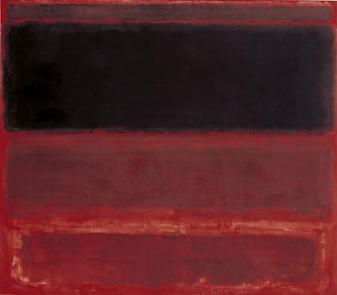
File:RothkoFourDarksRed.jpgLike smoke from a hot fire,
we briefly soil the air,
then vanish and disperse to nothingness--

The souls ruling our bodies,
like rainclouds drifting in sky,
suddenly scatter in cold north wind,
gone traceless in vastness--

Nothing exists after death,
and death is not a state--
only the end of the final lap
of fleeting life--

Greedy men, stop hoping for reward--
Anxious men, stop fearing punishment--
Time’s rapacious jaws devour us whole--
Death cannot be divided:
it destroys the body,
does not spare the soul--

There is no Hell, no savage god who rules the dead,
no guardian dog to hinder your escape--
These are just idle folktales, empty words,
myth, woven into nightmare--

Where will I lie when I am dead?” you ask--

You will lie among things never born.

(Seneca, The Trojan Women, Act II, Lines 393-407, Trans. Frederick Ahl)

Friday, February 10, 2012

The Year of the Bible!

A friend of mine and I declared 2007 to be “The Year of the Bad Joke.” For the first few months of that year, we stopped censoring ourselves. Whatever terrible, corny pun popped into our heads, we said it. The secret, we discovered, to making a bad joke funny consisted almost entirely of getting a high-five after you told it.

Speaking of bad jokes, I was recently surprised to learn how Pennsylvania’s State Representatives quietly and unanimously adopted HR 535 declaring 2012 “The Year of the Bible” here in the Quaker state. Since then an online petition is being circulated that may result in the assembly’s reconsideration of the resolution.

Now I’m not really the type to get riled up about things, and for many reasons (chief among them being how empty and frivolous a culture war gesture like this resolution is compared to some of the really harmful things this batch of legislators has conspired on) I’m not going to get riled up about this.

Still, it wouldn’t be so bad if what they meant was “The Year of the Bible [as Literature].” Sort of like a college class I saw offered once that considered the historicity of the text, the way its form and meaning has changed over time, etc., using some combination of close reading, translation study, sociology, and book history.

It would be a positive sign of things to come. Like maybe next year would be The Year of Franz Kafka’s The Trial, or The Year of Djuna Barnes’ Nightwood, or The Year of The Geneology of Morals, or The Year of Frank Herbert’s Dune.

Like maybe Harrisburg is outlining a broad liberal arts curriculum that promises to enrich and enlarge the solitary existences of all Pennsylvanians. Like maybe Harrisburg’s point isn’t to alienate Pennsylvania’s non-Christians nor to bolster the unhistorical conceit that the United States of America is the true Christian nation whose laws are God’s laws rather than the accreted trials, failures, prejudices, hopes and whims of generations of human beans working in both good and bad faith.

Tuesday, October 25, 2011

Driving Without Ego

It’s no secret how much ego American’s invest in their cars. In more than just a marketing, self-commodifying, status-seeking sense, our cars (or bicycles, or even our bus routes) are an extension of ourselves. How could our motility in whatever form not have an effect on how we view ourselves interacting with the social world?

My experience of driving is still limited. I’ve had a license for only about 14 years, and for a not insignificant amount of that time I lived an urban, no-drive lifestyle. But I’ve also driven the long way around the USA, from Philadelphia to Vancouver to San Diego to Houston and back, a trip of several thousand miles. I’ve taken numerous other long distance trips. So far I’ve gotten 1 speeding ticket and caused 1 collision (property damage only, no injuries, I’m fortunate). And lately I’ve been delivering Chinese food part time, which has proven to be a somewhat novel experience. I also love to drive.

For a while now, I’ve also been interested in the ways that we live our ethics. Philosophy sometimes has this appearance of being a leisure-time pursuit, a thing somehow outside of the various practices of everyday life…outside of sleeping, eating, working, watching tv, etc. But just a little reflection can usually belie that appearance. When we eat meat or abstain, when we do our duty or follow our heart, when we stare at the boob-tube or attend the cinema, we are living the ideas we have about our place and conduct in the world. Even when we’re just reading philosophy, we’re living philosophy.

And driving style is like this also.

Sometimes it can seem really cut-throat out there on the road amidst the traffic. And we might make of that a kind of metaphor for the world. That the world is cut-throat, a “rat race,” each of us paddling our separate canoes, trying to make our way in spite of everyone else. What I’m saying, I guess, is that while driving can be a metaphor for the larger world it also is the larger world.

And I’ve been thinking lately about how my own driving style could both reflect and embody a more ethical practice of life. It boils down to 3 general behaviors: be aware, be generous, and drive without emotion.

BE AWARE

  • I think it’s generally true that if you think you’re a good driver, then you’re not. A good driver is one who always strives to be good, not one who rests satisfied in the knowledge that they are good. A proud driver is a complacent driver.
  • Unchain yourself from that pride in your skill by being aware of the limits of your control. Can your skill prevent another driver from having a heart attack and swerving across your lane? Can your skill ensure that the transmission of the car ahead of you does not suddenly slip or freeze? A person can’t even claim to control their own body except in limited ways, so much of it runs automatically without our conscious input. Remember that and be humble.
  • But what you can control makes you responsible for the safety all of the drivers, bicyclists, pedestrians and property within your range of action. Behind the wheel, you vastly expand your potential for harm and destruction. Any time you’re driving, a split-second of inattention could make you a paralyzer or a murderer. You must protect others from yourself.
  • While you can’t prevent other drivers from acting like fools, you’d be a fool yourself not to make allowances for them. Speaking of which…

BE GENEROUS

  • The road does not belong to you alone, so don’t think you have the right to feel abused when someone cuts you off. The difference between them taking the road and you giving the road is only a question of attitude. Be generous and give the road freely.
  • Let other drivers be your guests, not your enemies, even when they are rude.
  • Give the driver in front of you room to brake as you would wish your guests to be comfortable.
  • Give other drivers room to merge as you would open your front door to a friend.
  • Give other drivers the ability to predict your behavior with efficient and effective use of turn signals. Drive with deliberate and clear intent, so as not to put other drivers on edge.

DRIVE WITHOUT EMOTION

  • Emotion won’t get you where you need to go, and it won’t make traffic move any faster, but it can slow you down by making you sloppy.
  • When you’re running late, stress can build, but there is no malice in the advance of time, just as there would be no ill-will in the crush of steel. These things are not your enemies. You cannot defeat them by hating them. Anger will not slow the passage of time or allow you to pass through solid objects, so keep your cool and your wits about you.

Monday, April 11, 2011

The Way: watch it alone so no one will see you cry. [Movie Review]

Charlie Sheen has been kicking up a lot of dust lately.  He’s done some really excellent work in the past and I enjoyed him on Two and a Half Men, but the ratio of attention-paid to his public breakdown over the attention-that-should-be-paid seems way out of whack, so beyond that I’ll leave the personal judgments to addiction specialists and tabloid parasites.

It would be nice if Sheen could divert at least a small fraction of that attention towards The Way (2010), an extremely small-budget film project written and directed by Emilio Estevez and starring their father Martin.

vlcsnap-2011-04-11-17h43m31s42The Way is about an ophthalmologist (Martin Sheen) with an only son (played in flashbacks and hallucinations by Emilio Estevez himself) who, after quitting a doctoral program at Berkeley to travel and find himself, dies suddenly while hiking in the Pyrenees.

The father, Tom, learns that his son was just beginning El Camino de Santiago, a walking pilgrimage through northern Spain to the Cathedral of Santiago de Compostela, where Catholics maintain the relics of the apostle St. James are interred. 

vlcsnap-2011-04-11-17h51m41s70Expecting only to retrieve Daniel’s corpse and return home, Tom decides on impulse to complete the pilgrimage instead.  A lapsed Catholic about whom his friends joke on the golf course that he lacks a soul, Tom is broken by the news of his son’s death.  Daniel’s cremated remains symbolize the weight of his guilt and failure as a father. 

As he walks the nearly 800km westward journey, Tom periodically lightens his load, both figuratively and literally, sprinkling ashes by the small handful at notable sites.

vlcsnap-2011-04-11-17h55m40s205Not only those ashes keep him company.  Three other pilgrims join him one after another, each broken in their separate ways, strangely mirroring Dorothy’s companions from The Wizard of Oz.  First he meets the Dutchman, who cuts a comic figure, though of all the characters, the precise history of his sadness remains to us obscure (ostensibly he walks the Camino to lose weight, though we also learn that he is married and that he may love her more than she loves him).  The next to join is a morose Canadian, whose heart has been hardened by an abusive ex-husband and an abortion.  The last is the cowardly Irishman, a travel book writer haunted by the real book he could never write, hiding from his publishers on the Camino.

vlcsnap-2011-04-11-17h56m10s237 The Way is a small film in many ways, filmed with a skeleton crew of less than 50 according to IMDB.  Like Herzog’s Aguirre, the Wrath of God, the filming of the pilgrimage required that the crew become pilgrims themselves, but The Way is no Aguirre.  Though people have died as the character Daniel died in the mountains, the film captures little in the way of peril.  Estevez’s camera captures odd moments, strangeness perhaps, but never the sublime.  Quiet pain and reconciliation dominate the mood.

vlcsnap-2011-04-11-17h56m57s220

The most similar comparison to my mind is that weird little movie David Lynch produced with Disney Studios, The Straight Story, about an old man who rides a lawnmower through the American Midwest to see his brother once more before he dies.  Both films will have you in tears if you’re not made of stone.

vlcsnap-2011-04-11-18h03m08s54

Wednesday, April 6, 2011

Quote of the Day: Affiliation

Look: I got nothing against God. I mean, I go to church on Sunday.  But any time a group of individuals likes the same thing, I don't like that.  It could be romantic comedies. It could be Oreo cookies. If they're all liking it together, I want that broken up.

—“Boston” Rob Mariano, Survivor: Redemption Island, Ep. 8, “This Game Respects Big Moves," 4/6/11

Monday, March 14, 2011

The Monster Promise Keepers of Syfy’s Being Human

syfy-being-human-josh-deer The executive producer of Syfy’s Being Human, the US remake of a UK series now in its third season, explained to TV Guide that he wanted to maintain the dark and morally ambiguous tone of the original, but there’s nothing ambiguous about the morality of the show.  What Jeremy Carver probably means is that his characters wrestle with temptations and occasionally falter, but there’s never much deliberation about what's the right thing to do or about who the bad guys are.  The moral universe of Being Human is clear: “Nature” is evil and “being human” means resisting it.

Being Human is only the latest to tap into the expanding popularity of vampires and the like.  As evidence by Twilight, True Blood, and Vampire Diaries, monsters are currently in season.  Jeffrey Jerome Cohen, in his introduction to Monster Theory (1996), the anthology that gave birth to that particular niche of cultural studies, argues that one could learn a lot about a culture by looking at the monsters it envisions.  Monsters embody a culture’s hidden fears and secret desires, it’s prohibitions and exclusions.  Monsters enforce traditions, scare children straight, and articulate differences between the self and the other.  So what does Being Human say about us?

The series begins when coworkers at a Boston hospital who happen to be a vampire and a werewolf decide to become roommates.  Aiden the vampire has been trying to stay on the straight and narrow path—not feeding on living human beings—but he falls off the wagon in the first episode and kills a nurse in the heat of passion.  Josh, meanwhile, has reacted to his werewolf transformation by living in a self-imposed, punishing social exile from the friends and family of his former life, but even so he’s terrified once a month of what he might do and whom he might hurt.  Taking a cue from the promise-keepers manual, Aiden the chaste and Josh the hermit decide a brother might help them keep their promises.

being-human-syfy-tv-show The monster mash is complete when the pair discover a ghost, Sally, haunting their quaint brownstone.  Sally was engaged to the landlord, Danny, who makes a friendly first impression but pushed Sally down the stairs in a fit of jealous rage and feels little remorse for killing her.  The moral choice shaping up for Sally is whether she should turn the other cheek and move on or become a vengeful poltergeist and make him sorry.

So each monster is tempted by some “natural” urge one’s humanity should resist: 

Vampire nature is predatory and power hungry.  Aiden must contend not only with his blood-thirst but also with his vampire friends, who have installed themselves in positions of authority (priests, police) and continually pressure him to do the same.  Werewolf nature is hyper-masculine and aggressive.  One of Josh’s plots included meeting his “maker,” who exhorts him to embrace “the Wolf,” which primarily involves hitting on women and starting fights with vampires.  Ghost nature is defined by the past.  They exist because they can’t let something go. 

These characterizations add up to how the show constructs the culturally-specific “nature” out of which humanity emerges as its negation. 

Friday, March 11, 2011

5 Reasons Why You Should Be Watching Fringe (If You Aren’t Already)

To help you discern whether you should really invest time in a television series, it’s good to ask if you would recommend it to someone.  Ask yourself: are you watching this show merely out of habit, because you watched it last week and the week before, because some past version of you once took a chance on it and you’ve just been taking it for granted ever since that he made the right choice?  Or would you still, after declaring all obligations to past decisions null and void, bravely commit yourself anew?

Tonight’s episode of Fringe is titled “Os.”  I will be watching it, and you should too. Here’s TV Guide’s description:

The team investigates a gang of thieves who can defy gravity; Walter assesses the harm he’s caused to the fabric of the universe. (Drama), (V=Intense Violence, L=Strong Coarse Language).

“Wow!  Say no more!  I’m already way interested!” is what you’re probably thinking.  But as if that brief summary weren’t already enough to convince you, I’m going to identify 5 more reason why you should be watching Fringe

SERIES SYNOPSIS

fringe.span But first a selective overview: “The team” is the FBI’s Fringe Science division, composed primarily of Agent Olivia Dunham, her assistant Astrid, and consultants Walter and Peter Bishop, father and son (sort of).  The Fringe division investigates strange phenomena, often employing strange techniques and equipment themselves in the process.

Similarities and Differences to X-files

The similarities to X-files are already apparent, but that’s roughly as far as they go.  The skepticism and faith set in romantic tension that defined Scully and Mulder’s relationship is wholly absent from Fringe.  From the first episode, Olivia demonstrates her openness to the unusual when, with the urgency of Jack Bauer, she accepts Walter’s administration of hallucinogenic drugs and enters a sensory deprivation tank in order to directly access the mind of a man in a coma.  Instead of skepticism and faith, the duality that Olivia and Peter set in romantic tension is, at least in the beginning, that of action and inaction.  (Although one further similarity to X-files, is that, like Mulder and Scully, Peter and Olivia are both pathological about the ways they represent their respective approaches, because they’re symptomatic of repressed childhood traumas.)

Also missing is the general atmosphere of horror and dread characteristic of X-files.  Much more of Fringe is filmed in the light of day.  It’s monsters appear mostly as men.

One last difference worth mentioning is that although both X-files and Fringe employ a two-part plot structure in which almost every episode advances not only the stand-alone plot (whatever strange occurrence they happen to investigate that week) but also the continuation plot (the series arc), Fringe’s series arc tends to dominate much of the time.  The reverse was true of X-files; individual episodes of X-files work much better as stand-alones, but Fringe episodes discourage missing episodes or out-of-order viewing.

Two Universes

So here are the major spoilers: the continuation plot begins, in a way, back in the early 80s, when Walter Bishop invents a window (and later a door) to a parallel universe that is different in mostly subtle ways; for example, Walter’s doppelganger (whom Walter names “Walternate”), instead of challenging reality’s boundaries, focused his equally brilliant energies on reinforcing and protecting order and stability, entering politics. 

Both Walters’ sons contract the same rare, genetic illness, and both fathers work towards a cure, but “our” Walter’s son dies before it can be stabilized.  Watching through his dimensional window, Walter observes his double overlook a lab result that would lead him to the cure and can’t bear to watch the other Peter die while he has the power to save him, so he resolves to cross between universes, administer the cure, and return.  But events don’t transpire according to plan, and Walter ends up abducting the other Peter, ostensibly to cure him over here.

fringe_tv_show_image_joshua_jackson__3_ Several consequences are the result of this kidnapping, Walter’s original sin.  Notably, 1) the physics of the other universe are destabilized by the penetration.  For example, a giant, bottomless vortex appears in the East River, symbolic of the emotional void opened up in Walternate by his son’s abduction.  2) Our Walter, having determined the doorway technology to be too unstable to use again, endeavors to find another way to return the Peter who is not his son.  His new method involves conducting radically experimental drug trials on young children in the hopes of turning them into a kind of passageway or key between the worlds, and as it turns out, his most promising subject is the young Olive Dunham.

Note, however, that these early childhood memories (of Peter being from another universe and of Olivia being subjected to abusive chemical and psychological experiments) are deeply repressed at the beginning of the series, so that the overall plot trajectory could, in some sense, be thought of as the gradual psychoanalytical process whereby these memories are unearthed and explored.

 FINALLY, THE 5 REASONS

1. It’s dark.

For all the sci-fi whimsy of the parallel universes, drug trips, mind-reading, etc, this series is no Warehouse 13.  Psychological trauma is at the scarred heart of it.  Walter is a Victor Frankenstein; his science is fundamentally transgressive.  But his materials aren’t (limited to) corpses.  They also include the fragile minds of children.  And the series cruelly manipulates its viewer into sympathizing with him, ironically, as we would sympathize with any protective, distraught father.

2. Olivia Dunham is awesome.

She’s no Super Wizard, of course; she has very human limitations, but she’s relentless and (usually) fearless on the case, which makes her great to cheer on.  Her past has also made her intense and complicated, and she drinks bourbon, unlike her more well-adjusted doppelganger.

3. Intelligent characters. 

Fringe is a JJ Abrams production, just like Lost, but it seemed to me that there were so many times during Lost that “drama” was the result of unnecessary, irrational miscommunications.  Like so much interpersonal “tension” could be avoided if the characters collected their thoughts and explained themselves in the least hyperbolic, most honest ways.  Not so with Peter and Olivia.  Both characters, if anything, are hyperrational.  They clearly have emotions, but they explain their emotions, and the suffering that sometimes results from one revelation or another is never of the “unforced error” kind, but rather of the “so this is the truth, in the most honest way I’m capable of saying it” kind.

4. Cool cameos.

Leonard Nimoy as Walter’s partner-in-crime, Dr. William Bell.  Kevin Corrigan (Grounded for Life, Kicked in the Head, Buffalo 66, one HILARIOUS episode of “Community”) as a mysterious guide-figure/bowling alley attendant who is much older (like centuries?) than he looks, and now Joan Chen (Josie Packer from Twin Peaks) as Walternate’s advisor/woman on the side.  TWIN PEAKS BONUS: In one episode, Walter is seen wearing green and orange glasses; he explains that an old friend of his from Washington state, Dr. Jacoby, invented them!

5. Thoughtful exploration of the theme of estrangement.

I’ve written about estrangement on this blog before in a couple different ways, but what I mean is the experience of alienation—perhaps what Becket calls “defamiliarization”—the traversal of otherness and the rupturing of the usual or the comfortable.  Fringe explores this experience in any number of ways, through an alternate universe that is similar to ours but different, through one character who makes his home in a universe in which he is a stranger, through another character who returns after a period of crisis to discover a stranger had lived her life in her absence, a stranger who looked like her, who wore her clothes, who even loved her beloved, and yet wasn’t her, who is therefore led to ask: if she isn’t those things, then what exactly is she?

Wednesday, March 9, 2011

I’m CT, and I’m a TV-aholic

testPattern Step 1: Admit you have a problem.  The average American watches about 20 hours of television each week*, according to the Bureau of Labor Statistics’ most recent data.  I watch more than this.  A lot more.  The overarching theme of this blog is about breaking my bad habits, so it’s time I confront this elephant in the room and ‘fess up in the hopes of significantly reducing how much TV I watch. 

Why should you read this post?  You probably shouldn’t, but there are two possible reasons: 1) to rationalize your own excessive television-watching, which won’t seem so bad in comparison, or 2) schadenfreude.

The basic procedure:

  1. Get a clear picture of the size of the problem and identify its parts.
  2. Systematically evaluate the types of television I watch and the reasons why I watch specific shows.
  3. Resolve to adopt measurable changes.

Current Schedule.  My television habit falls into three broad categories. 

  1. The TV I watch deliberately and routinely. (~16 hours a week)
  2. The TV I watch “when there’s nothing on,” like cable news, Lifetime movies, Jeopardy, Daily Show, etc. (???? >20 hours?  The TV is on pretty much all the time, so it doesn’t get full attention or anything but it’s always there when I am.)
  3. Movies. (~8 hours? )

The necessity of one broad goal is already apparent: Be more deliberate about what I watch and cut out the incidental viewing (category #2).  Just eliminate that and I’m already close to the average!  And movies I’m going to deal with in another post maybe, but I might make a rule that if I watch a movie, I have to make a blog post about it, to justify the time spent.

But what follows is the specific in-season (so not counting Mad Men or Big Brother, I’ll deal with them when they return) that I routinely and deliberately watch:

DAY

TITLE

DESCRIPTION/JUSTIFICATION

RUN-TIME

KEEP WATCHING?

SUN.

The Simpsons

Matt Groening’s once-revolutionary animated comedy has seen better days, and I rarely get a laugh out of it, much less a new thought.  I shouldn’t look forward to this except that it’s on when I’m likely to be eating and we watch TV during dinner in the household.  Hmm.  Maybe that’s something that needs adjustment.

30m

No.

Family Guy

I guess I still find this funny, but it’s definitely on the bubble.

30m

A tentative Yes.

MON.

Chuck

Chuck used to be about two things: the balance between Chuck’s amateur bumbling and the dangerous situations he found himself in, and the romantic tension between him and Sarah.  Even then it wasn’t great but now I find it pretty intolerable.  I started watching this because I was bored.  I liked when Scott Bakula was Chuck’s dad, but I should be embarrassed to watch it.

60m

Definitely not.

How I Met Your Mother

Hard to believe this CBS sitcom is already in its 6th season.  There are a bunch of early episodes I still never saw, but that’s ok because I don’t think Robin’s character ever started working until she was clearly being placed in the “Not Your Mother” category.  Barney (NPH) is a great character.  I laugh good laughs frequently during this show, but I think each character is running out (if not already run out) of ways to develop, and I’d like the writers to start moving towards closure.

30m

OK for now.

The Event

Crap.  This sci-fi, conspiracy drama just returned and I think I’m done with it.  The Event tried to capitalize on the popularity of Lost by imitating its structuring ambiguity as well as the popularity of 24 with political back rooms and terrorist threats.  But it lacks the strong characters of Lost and there’s nothing similar to the guilty pleasure we get out of watching righteous Jack Bauer punish the wicked of 24’s simplistic moral universe.

60m

No.

Being Human

Based on a UK series, Being Human is premised on a vampire and a werewolf moving into a Boston house that’s already inhabited by a ghost.  They want to live normally, but they have issues.  Given my interest in the ways we represent humanity, I’m bound to give this show a fair amount of leeway.  I like the characters, I guess.  I wish it were cleverer though.

60m

Tentative Yes.

Hawaii Five-O

Awful.  I began watching this out of respect for the original, but Alex O’Laughlin is no McGarrett.  Like McGarrett, his people respect him and he makes every case personal, but there’s something missing: Lord’s sense of propriety? His Hamlet-like graveness?  Only one character on TV today possesses the missing je ne sais quoi, and that is Horatio from CSI: Miami.  Also, Scott Caan as Danno is intolerably one-dimensional.  And he’s playing Danno, so that’s really saying something.

60m

NO.

TUES.

V

Ah, this alien invasion remake I’m a little torn on.  It’s better than The Event, for sure, and stars Morena Baccarin from Firefly and Elisabeth Mitchell from Lost, but it’s like the writer’s have no plan.  The show is thematically incoherent.  Is it about human souls? Emotions? Is it about media and propaganda?  Is it about justice and revenge? 

60m

Yes, for now.

WED.

American Idol

Although I’ve really been enjoying this season: there’s a lot of talent on the stage and Steven Tyler and J-Lo are fantastic replacements for Simon Cowell and Paula Abdul, I could easily stop watching this show if it weren’t that it’s a household show.  I would never watch it by myself, but I have fun watching it with others.  I really wish it were just an hour, and not three hours spread over two days each week.

120m

Yes.

Survivor

Survivor is like Big Brother, but where as Big Brother is primarily mentally punishing and paranoid, Survivor is much more physically punishing.  Also, the set is frequently breath-taking. 

60m

Yes.

Modern Family

A great ensemble sitcom that always promises lots of laughs.  I’m hard-pressed to identify any weak players.  Maybe the Dunphy kids.

30m

Yes.

THURS.

American Idol

See above.

60m

Yes.

Big Bang Theory

Now that Two and a Half Men is finished, this will be my only source of Chuck Lorre jokes, but maybe I should outgrow them.  I don’t care about the characters and can’t count on belly laughs, so this one is nixed.

30m

No.

Community

The funniest show on TV right now, I’d say.  They’ve really taken off with the second season (similar to Parks and Rec) with more and more outrageous plots.  I’m glad that television has a place for Chevy Chase.

30m

Yes.

The Office

I’m ready for this to be over, ever since Pam and Jim got married.  Steve Carell has signaled that he’s leaving, so hopefully the show will end with him.  Still reliably funny, though.  I’m seeing this series through to the end.

30m

Yes

Parks and Recreation

Another great ensemble sitcom operating on all cylinders. 

30m

Yes

30 Rock

I guess Alec Baldwin is who makes this show for me, but now that I think of it, 30 Rock is probably on the downslope along with The Office.  Those two shows were the original anchors of NBC’s comedy line-up, and one of the main reasons why Thursday’s are/were “TV Night” for me (despite every night being TV Night).  But I’m not so committed to this show that they won’t be due for a reevaluation at the end of the season.

30m

Yes.

The Mentalist

Hmm.  This investigative procedural has a gimmick like they all do.  Simon Baker’s Patrick Jane isn’t a crime novelist (Castle), a math genius (Numbers), a psychic (Medium), or a pretend psychic (Psych).  He used to be a pretend psychic, but then his wife and daughter were murdered by a serial killer, Red John, and now he’s one of the most cynical, nihilistic, vengeful, calculating characters in all of TV.  On the other hand, Robin Tunney is awful, and the rest of the CBI team are pretty non-essential as well, with the exception of the internal affairs investigator LaRoche, who operates as a foil to Jane, calculating, intelligent, and solitary.  Eventually he and Jane will be teaming up against Red John, and I can’t wait.

60m

Yes.

FRI.

Fringe

Probably my favorite show of all.  I avoided this show until its 3rd season based on my initial reaction to the first 30 minutes of the pilot episode.  I hated Dawson’s Creek and I hated Pacey, so I took it out on Joshua Jackson, who plays Peter Bishop in this X-files-y, family drama, parallel universe sci-fi series.  Like those other show I loved and then were cancelled, Dollhouse and Terminator: the Sarah Connor Chronicles, FOX has moved Fringe to the Friday night slot, where it’s already low ratings will continue to drop.  The world is not long for Fringe, unfortunately.

60m

Yes.

Well, that was exhausting, but I’ve whittled down 15.5 hours down to 11.5 (provided I muster the force of Will to carry out my plan).  For several of the shows which I’ve decided to keep watching, I’m going to force myself to justify those decisions even more deliberately by writing blog posts about several of them.

__
*
Bureau of Labor Statistics: This number is skewed a little by the unemployed and old people, who watch more TV than anyone else.  Here are some more specific details I found interesting:

Hours of TV

Weekdays Weekends

Men

2.80 3.81

Women

2.43 2.87

25-34 year olds

2.06 3.16

Employed F/T

1.85 2.98


Friday, February 11, 2011

What's next in Egypt? (also, What's the Use of Critical Thinking?)

[I know I haven't posted since early last summer, but I thought I’d share something I posted today on the private blog I maintain for one of my classes.  The class is freshman composition, and lately they’ve been reading about nonviolent resistance, Gandhi and MLK Jr.]

After 18 days of protests, the man who has sat as Egypt's head of state since 1981 (the year I was born) and whose administration has withstood even violent terrorist-style attacks, Hosni Mubarak, has resigned, following the recent example of Tunisia's former President, Ben Ali.  A transitional government is now left in the hands of the Supreme Military Council, an institution that perhaps would not have followed an order to shoot on the crowds even if Mubarak had given it.

flag A famous photograph was taken in the celebratory aftermath of another, perhaps similar, revolution when massive protests and violence led Romania's military to overthow Ceausescu's* communist administration in the last days of 1989.  The photograph (pictured to the right) is of the Romanian flag against the sky, with the red communist star in the center cut out.  Slavoj Zizek, the well-known Slovenian philosopher, says about the photograph that:

It is difficult to imagine a more salient index of the "open" character of a historical situation "in its becoming." 

Translation: the communist star represented the thing that imposed both meaning and order on human social existence in Romania (something Zizek calls the "Master Signifier"), and the hole left over represents both the exciting and terrifying possibility of meaning and order that now takes it's place.

Zizek further asserts that:

the duty of the critical intellectual...is precisely to occupy all the time...the place of this hole...  philosophy begins the moment we do not simply accept what exists as given ("It's like that!", "Law is law!" etc), but raise the question of how is what we encounter as actual also possible.  What characterizes philosophy is this "step back" from actuality into possibility... (Tarrying with the Negative 2)

These words return to my memory as I ponder what possibilities lie in wait for the people of Egypt.

But even more than that, I think of the various reasons why we're doing what we're doing in class...  Obviously the basic purpose of the course is to teach you how to write for college professors.  My job is to give you all the writing and structuring tools you need to make college writing as easy and painless as possible.  But the grander purpose of non-vocational, liberal arts and humanities courses is to prepare us to be critical thinkers (or "critical intellectuals," as Zizek says).  Do you agree with his assessment of the "duty of the critical intellectual?"  What do you think is the purpose of critical thinking?  What do you think is our duty as developing intellectuals?

_______

*Interesting social media sidenote: During the last speech of Egypt's former president Hosni Mubarak yesterday, the hashtag #Ceausescu started trending on Twitter, entering top 10.

Wednesday, July 7, 2010

Big Brother 12

big-brother-poster I realize I’ve been posting up a storm lately (by my standards), and I apologize if what you like about this blog is how infrequent and therefore unobtrusive it is, but back in January when I reviewed Dead Set, I wrote:

(confession: I never miss Big Brother in the US, but in my half-hearted defense, the differences between the two shows make the US version much more of  a strategy game and much less of a schadenfruede party...I could say much more but maybe I'll save that for a post in the summer when the show returns).

Well…here it is summer and Big Brother 12 is premiering on Thursday.  I’ve actually been considering doing a weekly update sort of thing, but we’ll take that as it comes.  What I want to accomplish in this post is to give a brief overview of what about the show works for me, in part by contrasting the US version with its International cousins.

Season 1 and the International version:

In a sense, the second season of Big Brother US, when they introduced the Head of Household competitions, is the first real season of Big Brother US.  Season 1 (which aired in 2000, so we’re talking the very tip of the reality game show spear here) was formatted in the same way as the International versions that preceded it.

Ten contestants enter a house wired for 24-hour surveillance.  For the duration of the show, no news from the outside world reaches their ears (9/11 was a unique and understandable exception to this prohibition in season 2, particularly as one contestant’s cousin was killed in the attack). 

Each week, the contestants individually and secretly nominate two of their fellow houseguests.  They are not permitted to discuss their nominations (which would lead to strategizing and alliance-forming) with any other contestants.  The two contestants receiving the most nominations are placed “on the chopping block” to be voted on by the viewing public.  Whomever the public votes against leaves the house, and so on week after week.

This show format made Big Brother 1 a popularity contest par excellence.  The contestant whom the largest percentage of the voting audience wanted to win would invariably win.

What was somewhat interesting about this season was that the participants themselves didn’t really know what to make of what they were experiencing.  Survivor had also just recently commenced, so the closest analogue that they were likely familiar with would have been Real World, which had been in production since 1992.  But Real World was a very different show that emphasized conflict rather than competition.  What worked for participants of Real World translated strangely and haphazardly into the game show atmosphere of Big Brother 1.

The HOH and the rise of Will Kirby:

But then in Season 2 the producers (known as the TPTB, or The Powers that Be, in Big Brother online forum parlance), made the first and most significant of several format changes: they introduced the role of Head of Household.  Instead of secret nominations from each of the houseguests at the end of each week, at the beginning of week the show would hold a Head of Household (HOH) competition, the winner of which would have the sole responsibility for nomination.  Furthermore, instead of having the public vote on which of the two nominees would be evicted, the houseguests themselves (excluding the HOH and his or her two nominees) would cast a secret ballot to make that determination.

Let the strategizing and alliance-making begin, basically.

Also, Big Brother US is no longer purely a popularity contest; it is not at all the case that the character whom the audience most favors is guaranteed to win.  In fact, it is quite possible that the contestant whom the audience most despises might win, should his or her strategy prove superior.  Instead of being a show about popularity and humiliation, Big Brother grew to be about loyalty, betrayal, hubris, revenge, duplicity and paranoia (and popularity and humiliation).

Season 2 also saw the rise of Will Kirby, the young doctor from Florida who ended up taking home the prize (which was then and has remained a half a million dollars).  Will was so well-suited to the game, such an effortless liar with such a trustworthy face and such an intuitive grasp of group behavior that almost every self-styled “strategy player” to enter the Big Brother house since has been laboring under the anxiety of his influenceEveryone knew that Will was a liar, but no one ever thought that Will was lying to them.

BB8FloorPlan Season 8 and the Live Feed:

Season 8 was both a high-point in the show and kind of a low-point in my life.  CBS sells access to a 24-hour live internet feed, and in season 8 they were offering a free month of access as a promotion to get you hooked.  In season 9 I actually paid for a month of access.  I’m better now, but for a while there, I would wake up, turn on the feed, and mostly watch people sleep as I was preparing to teach my introduction to literary theory summer course each day.  Actually, because the house is on the west coast and I’m on the east coast, and because that Season 8’s houseguests liked to do their scheming really late into the night, chances were often good that a few of them were still up and talking as I was waking up.

It’s hard for me to defend a viewing practice that on the face of it looks so pathetic, but the best I can say is that there’s something about the pace of real life—it’s tediousness and monotony—that the edited, prime time version couldn’t hope to capture—that in fact the prime time version specifically omits.  If you can’t stand the work of Samuel Beckett, then I can’t expect you to understand, but if you can, then maybe you know what I’m talking about.  Malone have mercy on us both.

------------------

I have more things to say, but in a few minutes I’m taking off for a few days, and I wanted to get this up before the live premiere airs.  So expect a few more ruminations as well as my thoughts on this season’s cast on Friday or Saturday.

BONUS: Mose Allison, “Big Brother”

Tuesday, July 6, 2010

Eating Less Meat: It’s surprisingly easy to do.

Vegetables are delicious.  I bet it was the meat and dessert industry that started spreading the meme that kids had to eat their vegetables if they wanted dessert, as though it were a chore to eat vegetables.  And then kids started to believe it. 

After reading James McWilliams analysis of the rift between animal rights advocates and sustainable farming advocates on the subject of synthetic meat at the Atlantic, I thought I might write a bit of an update to the post I wrote way back in December about roughly the same subject. 

I concluded that post by confessing that I ate all the usual meats without much in the way of guilty feelings.  Since then I’ve pretty drastically reduced my meat intake.  My decision to change my diet was not based on animals’ capacity to think or suffer but because a little over two months ago a few friends of mine and I were discussing the carbon costs of our diets.  Heh… Just writing that makes me feel like such a caricature of a liberal yuppie.

But anyway, my friend was pointing to some research he had read about that suggested, persuasively to him, that given the carbon costs of industrial meat production, going vegetarian was one of the most effective ways for an individual to reduce his carbon footprint.  I don’t mean to evaluate that argument here, but you can read about it at New Scientist

thaistirfry Now, my friend is not a vegetarian, so it’s not like he was judging the rest of us, but partly because by this point in the evening we were already several beers in, I decided to call him on his mild hypocrisy.  I told him that if he went vegetarian, I would too, thus doubling the environmental impact of his dietary decision.

We made a few concessions on the spot to make the challenge realistic and decided it would last only 6 months (actually until November 5th, because it’s so easy to remember).  We were permitted fish for two meals a week, some other meat for one meal a week, but beef only once a month because it’s apparently the worst, environmentally speaking.  Other than that we would abide by a strict vegetarian (though not vegan…eggs and dairy are allowed) diet.

Since then, 2 months in, I’ve got to tell you, it has been surprisingly easy and I feel really healthy and good about it.  Here are some ways that my eating habits have changed (or not):

  • I order vegetarian meals in restaurants (easy)
  • I don’t eat fast food (a little tough at first, but there’s no way I’m wasting a precious beef credit on a Big Mac, now it’s easy)
  • I never realized how many hoagies I ate.  On average, I probably ate between 2 and 3 hoagies a week before.  Now I eat more peanut butter sandwiches, potato chips and fruit.  (moderately hard)
  • I eat tofu sometimes, like in a delicious stir-fry (easy)
  • I’ve been a recipe experimenter for a long time now, and if anything, contrary to what you might think considering that a vegetarian diet only reduces the number of ingredients I have to work with, my diet has grown more interesting, because instead of getting stuck in the old beefporkchickenpastabeefporkchickenfish rut, I’m trying all sorts of new recipes.  (fun and easy)
  • I’ve experienced no loss of energy; if anything, I feel less sluggish than I used to
  • I save money, especially on lunches, which I can then spend on expensive steaks once a month

So anyway, so far so good.  There’ve been only four or five minor slip-ups so far between my friend and I, and already I think we’re having a positive impact on the environment.  Just kidding, but seriously, significantly reducing the amount of meat I eat has been surprisingly easy for me and it’s delicious. 

There’s still four months ago, but I have a feeling that the eating habits I’m developing now will extend beyond Guy Fawkes’ day.

BONUS: Make this.  It’s easy, customizable, and you will like it.

Monday, July 5, 2010

“One long racking chronicle of change”* (in a good way): A Review of Schismatrix Plus

3742-1Title: Schismatrix Plus
Author: Bruce Sterling
Year: 1996, the collection published; 1982-1985, the novel and stories;
Rating: 3.5/5 levels of
prigoginic complexity
Categories:
Cyberpunk, Sci-fi-losophy, New Space Opera
Back Cover:

In the last decade Bruce Sterling has emerged a pioneer of crucial, cutting-edge science fiction, his work lauded by critics and contemporaries alike.  Now for the first time in one volume comes every word Bruce Sterling has ever written on the world of the Schismatrix—where the Shaper revolutionaries struggle against the aristocratic Mechanists for ultimate control of mankind’s destiny.  Experience the classic full-length novel, Schismatrix, plus thousands of words of mindbending short fiction from a storytelling master in overdrive.  It’s tough.  It’s timeless.  It’s vintage Sterling.

Despite growing up as a fan of science fiction in the 1980’s and 90’s, I managed to avoid for the most part the science fiction of the 1980’s and 90’s.  My dad bought a lot of sci-fi in the decades before I was born, and my tendency was always to head out to the garage rather than the library when I needed something fun to read.

As a result, Bruce Sterling’s Schismatrix is one of the only “cyberpunk” novels I’ve ever read.  (Film and television is a different story, of course.  I’ve seen loads of movies that you’d characterize as cyberpunk and/or that were based on cyberpunk novels.)  On the other hand, Schismatrix and the other stories included in this volume don’t necessarily strike me as ordinary cases of the genre. 

Certainly, Schismatrix is a novel that explores the way that technology might dissolve political and social institutions as well as the “natural” cohesion of the human species, which is (according to Wikipedia) a common trope of cyberpunk works, yet whereas most examples of the genre take place on some dystopic, near-future earth, Sterling’s novel is set almost entirely in outer-space habitats over the 200 years between 2186 and 2386 (the life-span of its main protagonist, Abelard Lindsay). 

Furthermore, while it may be typical for cyberpunk authors to borrow stylistic cues from the detective and noir archives, Schismatrix seems, especially in the first third of the novel, to borrow heaviest from the swashbuckling adventure tales that informed the space opera sub-genre of sci-fi’s golden age (or, what may be more likely, Sterling is borrowing directly from that sub-genre).

Indeed, the plot of the first part of the novel, in which the hero, a young and rebellious aristocrat, is betrayed by his best friend, subsequently exiled from his homeland and stripped of his high status, and must rely only on his wits and charm to survive all manner of dangers ranging from assassins to space-pirates, reads almost like something out of The Count of Monte Cristo or Kidnapped. 

What all that swashbuckling serves as a vehicle for, however, is Sterling’s fantastic speculations about the various forms that human life and society may adopt as those forms, with the help of gene manipulation, surgery, drugs, and cybernetic prosthetics, grow ever less constrained by accident and ever more into the deliberate manifestations of our ideals. 

The two main “factions” of post-humans, mentioned in the back-cover blurb, are the Shapers and the Mechanists.  The Mechs accept the accidents of birth but accoutre their bodies with all manner of prosthetics, monitors, optic implants, seratonin drips, etc. to make up for and exceed any imagined lack.  The Shapers, on the other hand, aren’t so much born as made, having opted to make intelligence and planning rather than mechanical advantage their forte.  Designed from the gene up to be not only free of defects and beautiful but also super-intelligent, Shapers typically undergo rigorous training programs to develop their mental skills and ingest complex drug cocktails to enhance their senses and focus their minds.

The technologies employed by each of these factions are not incompatible with each other, of course, and most of Sterling’s characters operate outside of pure Shaper or pure Mechanist designations.  On the contrary, what keeps the two groups distinct and at each others throat throughout much of the novel is no more or less than ideology.  The Shapers, for example, in addition to their skill-acquisition programs, also endure ideological conditioning that prejudices them against the Mechanists.  They are made to view with disgust the flawed, stinking bodies of the “unplanned.”

But if there is one ideology described within the text that seems to rule them all then it must be the Posthumanism that Abelard Lindsay ultimately advocates.  Borrowing terminology (if not the actual science) of Ilya Prigogine’s theories of complex systems, Sterling characterizes Posthumanism as a schema that organizes existence not in terms of species, race, or function but in terms of complexity.  Specifically, the text describes four levels of complexity and speculates on a fifth.  The first is the simplicity of the primordial, pre-causal, pre-continuum universe.  The second level of complexity is Space-time.  The third is Life and the fourth is Intelligence. 

The political agenda of those in the novel who espouse posthumanism is to engender leaps to ever higher levels of complexity, hence their advocacy for such large-scale projects as terraforming Mars (thereby “catalyzing” the Third Prigoginic Leap from inert matter to amoebic life).

------------------

While Schismatrix and the other stories collected in this book are far from literary masterpieces, they are nevertheless imaginative and engaging works that I highly recommend, particularly to the reader who may be interested in the limits of humanity and the constraints of ideology, which are often one in the same.

------------------

* from p. 214:

The history of the Schismatrix was one long racking chronicle of change. The population had reached nine billion. Within the Ring Council, power had slipped from the narcotized hands of the Zen Serotonists. After forty years of their reign, new Shaper ideologues embraced the aggressive schemes of visionary Galacticism.

The new creed had spread slowly. It was born in the interstellar embassies, where ambassadors broke human limits in their struggle to grasp alien ways of life. Now the Galacticist prophets stood ready to abandon humanity entirely, to achieve a Galactic consciousness where mere loyalty to species was obsolete.